Constitutional restraints stop governments from gaining too much power and ensure the protection of individual rights. By maintaining a balance of power among branches, they prevent abuse of authority. This article explores these restraints’ principles, history, and their importance in modern governance.
Key Takeaways
- Constitutional restraints are essential for preventing the excessive exercise of governmental power and protecting individual liberties, enforced through the principles of separation of powers and checks and balances.
- The Supreme Court plays a critical role in interpreting and upholding constitutional restraints, with landmark cases establishing precedents that safeguard the rights enshrined in the Constitution, particularly concerning free speech and prior restraint.
- Recent challenges, including the balance between national security and free speech in the digital age, highlight the ongoing need for judicial oversight and legislative efforts to maintain the integrity of constitutional governance.
Understanding Constitutional Restraints
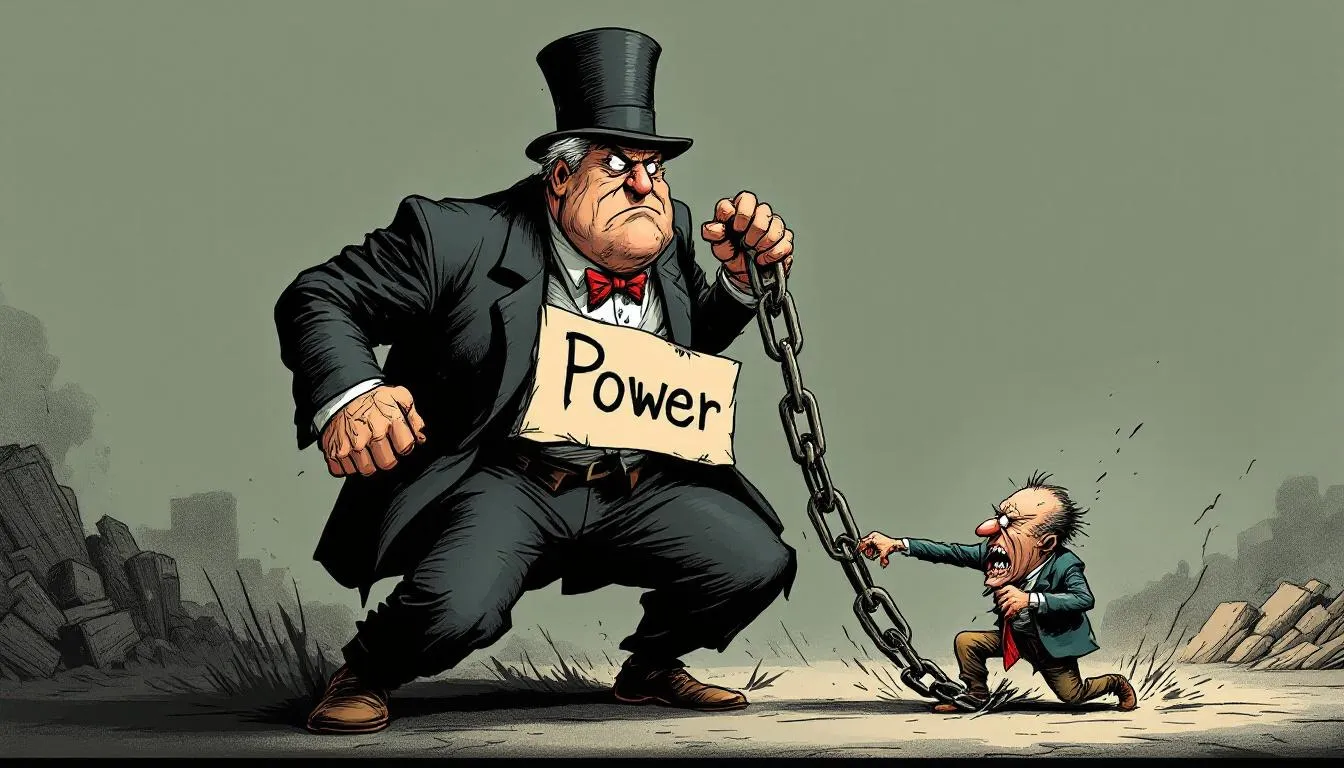
Constitutional restraints are mechanisms embedded within the framework of the Constitution to prevent the government from exercising excessive power and ensure the protection of individual liberties. These restraints are designed to curtail governmental authority, thereby safeguarding the fundamental rights of individuals from potential abuses. Constitutional restraints limit the reach of governmental actions, ensuring a balanced and just governance system.
Constitutional restraints protect individual liberties and prevent any single branch of government from dominating or misusing its power, preserving the democratic fabric of society. The principles of separation of powers and checks and balances form the bedrock of these restraints, creating a robust system of governance that prevents the concentration of power. For example, the actions of an administration within the executive branch are subject to constitutional restraints to prevent abuse of executive power.
Comprehending constitutional restraints is key to understanding modern governance. Exploring their historical background and principles reveals their importance in protecting individual rights and maintaining balanced power distribution, which can grant a framework for justice.
Historical Background of Constitutional Restraints
The establishment of constitutional restraints was significantly influenced by the weaknesses of the Articles of Confederation, which highlighted the need to establish a stronger yet limited government. The framers of the Constitution engaged in extensive debates to define the boundaries of governmental power and ensure the protection of individual rights. These historical discussions shaped the foundational principles that guide constitutional restraints today. Benjamin Franklin proposed a plan for colonial unity to aid in mutual defense, promoting the idea of a general government for the colonies, which also influenced the development of these principles. Key moments in this development included the Albany Congress and the Continental Congress, both of which played crucial roles in fostering colonial unity and laying the groundwork for the eventual creation of the American federal government and its constitutional restraints.
Throughout history, there have been notable instances where governments have justified prior restraints to suppress speech and maintain control. For example, the Sedition Act of 1798 aimed to silence criticism of the government during a period of tension with France. Similarly, during the Civil War, the U.S. government imposed restrictions on speech and press to prevent assistance to the Confederate enemy and maintain military secrecy.
These historical examples underscore the delicate balance between governmental authority and individual liberties. They illustrate the ongoing struggle to define the limits of power and the need for constitutional restraints to protect the fundamental rights enshrined in the Constitution.
Key Principles and Doctrines
At the heart of constitutional restraints are the principles of separation of powers and checks and balances, which are fundamental doctrines underpinning the framework of governance. The principle of separation of powers establishes distinct roles for the legislative, executive, and judicial branches, ensuring that no single branch can dominate or misuse its authority.
Checks and balances are integral to constitutional restraints, providing mechanisms for each branch of government to limit the powers of the others. This system prevents any single entity from becoming too powerful and ensures that governmental actions are subject to scrutiny and oversight. The interplay of these principles creates a robust framework that protects individual liberties and maintains the rule of law.
These principles form the bedrock of constitutional governance, ensuring that power is distributed equitably and that governmental actions are held accountable. By establishing a system of checks and balances, the Constitution provides a safeguard against the abuse of power, reinforcing the protection of individual rights and the integrity of democratic institutions.
Supreme Court’s Role in Upholding Constitutional Restraints
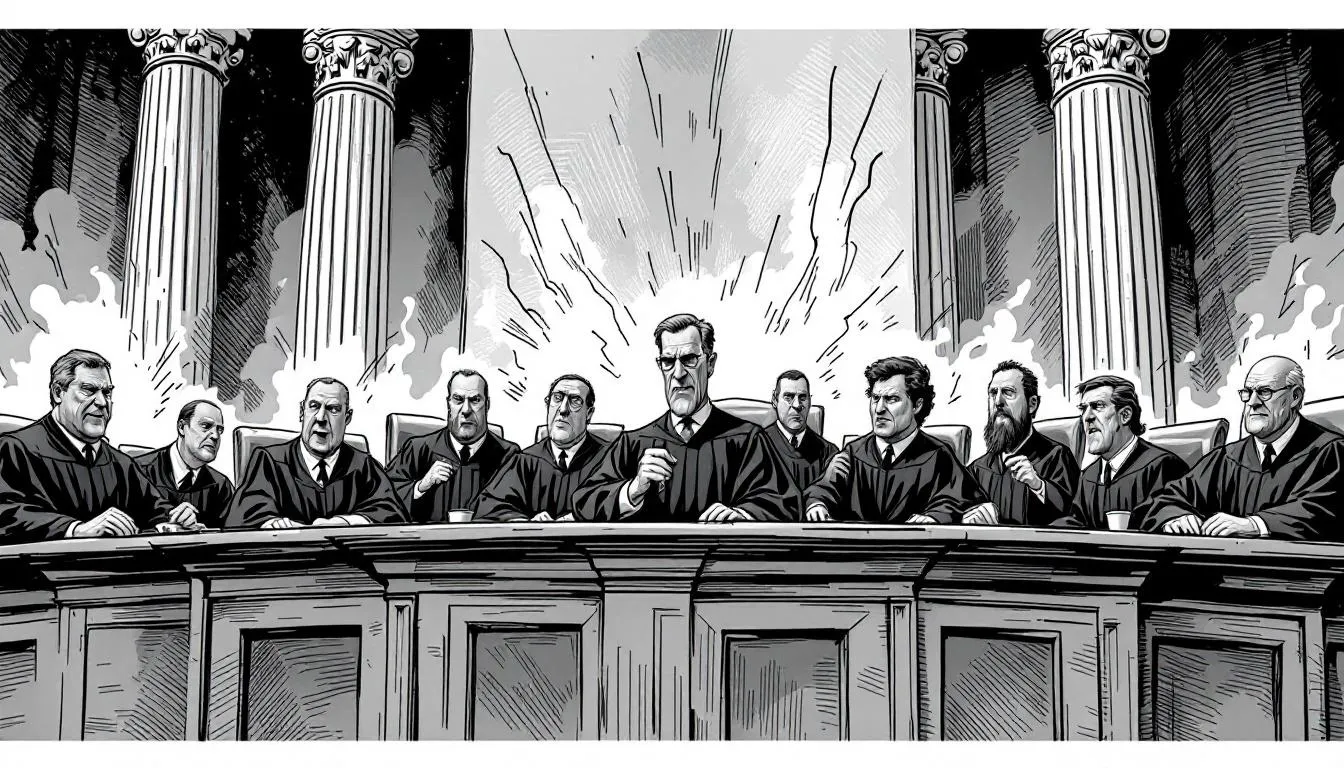
The Supreme Court plays a pivotal role in interpreting constitutional restraints, shaping the balance between governmental power and individual rights through its rulings. As the highest court in the land, the Supreme Court’s decisions have a profound impact on the enforcement of constitutional principles and the protection of First Amendment rights. Examining landmark cases reveals how the Court has upheld these restraints and influenced the legal landscape.
A significant case to note is Trump v. CASA, which limited the ability of courts to check presidential power. This decision has gained considerable attention. The ruling specifically addressed the legal authority of the president and underscored the importance of constitutional restraints in checking presidential power within the system of checks and balances. This ruling ended the lower courts’ ability to issue nationwide injunctions, except in class action cases, thereby impacting the judiciary’s capacity to act as a check on executive authority. Such decisions highlight the evolving nature of constitutional restraints and the ongoing challenges in maintaining a balance between governmental power and individual rights.
The Supreme Court’s role is crucial in ensuring that constitutional restraints are upheld and that governmental actions remain within the bounds of the law. Through its interpretations and rulings, the Court provides a vital check on the exercise of power, safeguarding the democratic principles enshrined in the Constitution.
Landmark Cases Defining Constitutional Restraints
The establishment of constitutional restraints in the United States drew from Enlightenment ideas that promoted individual liberties and limited government authority. Landmark cases such as Brown v. Board of Education and Obergefell v. Hodges have set critical precedents in constitutional law, challenging segregation and affirming the right to same-sex marriage, respectively. These cases highlight the Court’s role in enforcing equal rights and expanding the interpretation of constitutional protections.
In the context of prior restraints, the Supreme Court’s rulings in Near v. Minnesota and New York Times v. U.S. are particularly significant. In Near v. Minnesota, the Court established a general principle against prior restraints on speech, declaring it ‘the essence of censorship’ and reinforcing the protection of press freedom. Similarly, in New York Times v. U.S., the Court emphasized that the government must demonstrate an immediate and direct threat to national security to justify prior restraint. The decisions served as formal precedents for future rulings on prior restraint, shaping the legal landscape regarding censorship and free press protections.
These landmark cases underscore the importance of judicial oversight in upholding constitutional restraints and protecting individual rights. They serve as precedents that guide subsequent cases and ensure that governmental actions are held accountable to constitutional judgment principles.
The Role of Chief Justice and Federal Courts
The Chief Justice plays a pivotal role in shaping the interpretation of constitutional restraints through landmark court rulings. The Chief Justice influences the legal landscape and ensures constitutional principles are upheld through steering the Court’s interpretations and framing opinions. The enforcement of these principles is further supported by judicial review and oversight by federal and state agencies.
Federal courts are essential in applying Supreme Court decisions and interpreting constitutional restraints on a case-by-case basis. They monitor compliance with constitutional principles and provide a check on government actions through various legal channels. Regulatory bodies and courts work together to ensure that governmental actions adhere to constitutional restraints, thereby protecting individual liberties and maintaining the rule of law.
Prior Restraint and Free Press: Legal Boundaries
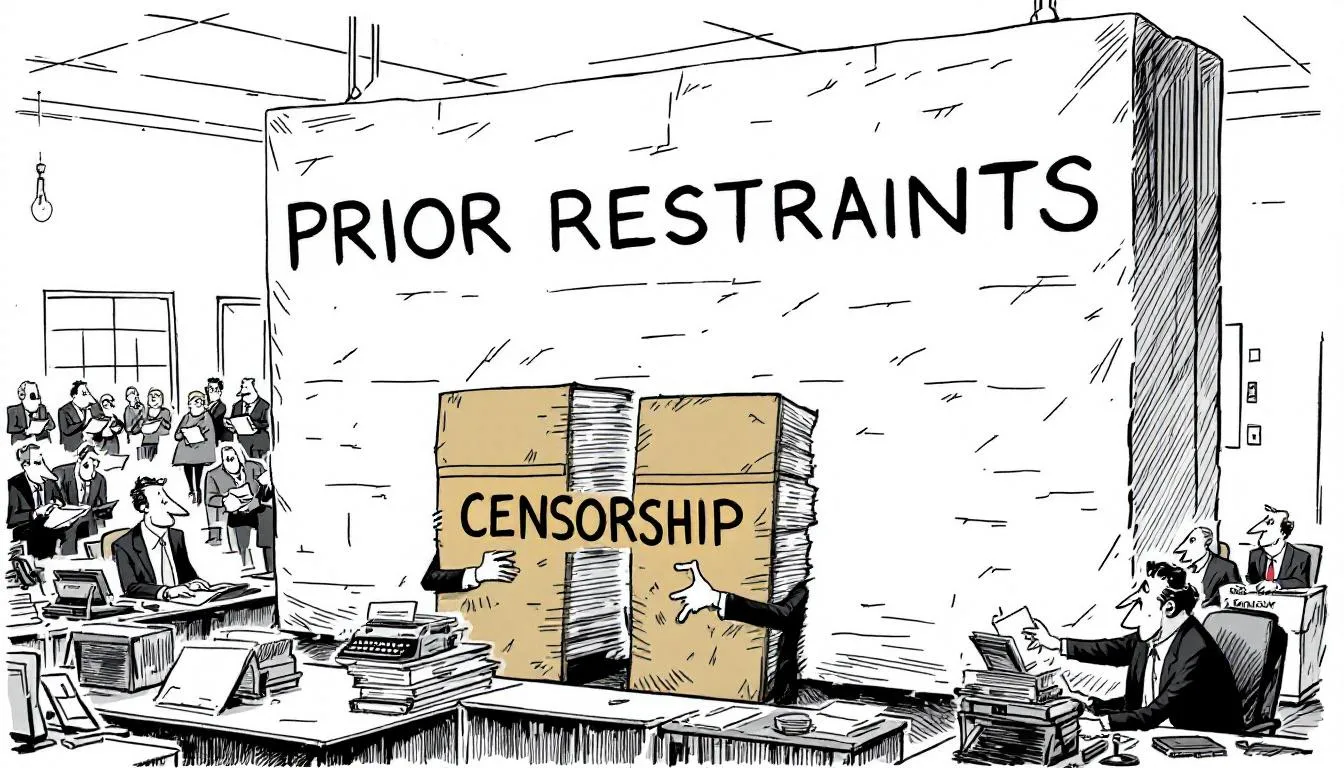
Prior restraint refers to government actions that prevent speech or publication before it occurs, a practice that is heavily scrutinized under the First Amendment. This form of censorship is often viewed as unconstitutional by the courts, as it infringes on the fundamental right to free expression and press freedom. Prior restraint is considered one of the most severe forms of government censorship, as it requires government approval before publication.
The legal boundaries of prior restraint are defined by the principle that governmental actions must not prevent the dissemination of information unless there is a compelling justification. The scrutiny of prior restraint is rooted in the belief that a free press is essential to a functioning democracy, allowing for the open exchange of ideas and holding those in power accountable. The Supreme Court allows restrictions on the content of speech in limited areas such as obscenity, defamation, and incitement, ensuring that these exceptions are narrowly defined to protect free expression. Legal inquiry into the content of speech or publication must also respect constitutional protections and avoid content-based discrimination, maintaining due process and safeguarding First Amendment rights.
Examining landmark cases and guiding principles reveals the balance between protecting free expression and addressing legitimate governmental concerns. This section delves into the legal foundations of prior restraint and its implications for press freedom.
Near v. Minnesota and the Principle of No Prior Restraint
The Supreme Court’s ruling in Near v. Minnesota is a cornerstone in the legal doctrine against prior restraint. In this landmark case, the Court ruled against a state statute that allowed prior restraint on a publication, establishing a precedent for the doctrine of no prior restraint. The case involved Jay Near, a publisher who was prevented from printing his newspaper, which criticized local officials.
The ruling in Near v. Minnesota established a foundational precedent against prior restraint by declaring it ‘the essence of censorship’. The Court emphasized that the government generally cannot impose prior restraints on publications, reinforcing the principle of free press. This decision marked a significant step in protecting the freedom of the press and limiting governmental censorship.
This precedent affirmed that prior restraint is largely unconstitutional, except in exceptional circumstances. This principle has guided subsequent cases and continues to be a critical safeguard for press freedom and free expression in the United States.
Pentagon Papers Case: Protecting Free Expression
The Pentagon Papers case is another pivotal moment in the battle against prior restraint and for the protection of free expression. In 1971, the U.S. government attempted to stop the New York Times and the Washington Post from publishing classified documents related to the Vietnam War, known as the Pentagon Papers. The Washington Post played a crucial role in the Supreme Court decision, standing alongside the New York Times in defending press freedom. These documents revealed controversial and often misleading actions by the U.S. government during the war.
The government’s attempt to impose prior restraint on the New York Times raised significant questions about the balance between national security and the First Amendment. The Supreme Court ultimately ruled in favor of the New York Times, asserting that prior restraint was unconstitutional and that the government had not met the burden of proof required to justify such censorship. In New York Times Co. v. United States (1971), the Court reinforced that prior restraints are unconstitutional even when pertaining to national security, emphasizing the strong protections of the First Amendment.
This decision reinforced the protection of free expression under the First Amendment and highlighted the importance of a free press in holding the government accountable, in my opinion. The Pentagon Papers case underscores the strong presumption against prior restraint and the necessity of protecting free expression, even in the face of governmental claims of national security defense.
It remains a landmark ruling that continues to influence the legal landscape of press freedom.
Balancing National Security and Free Speech
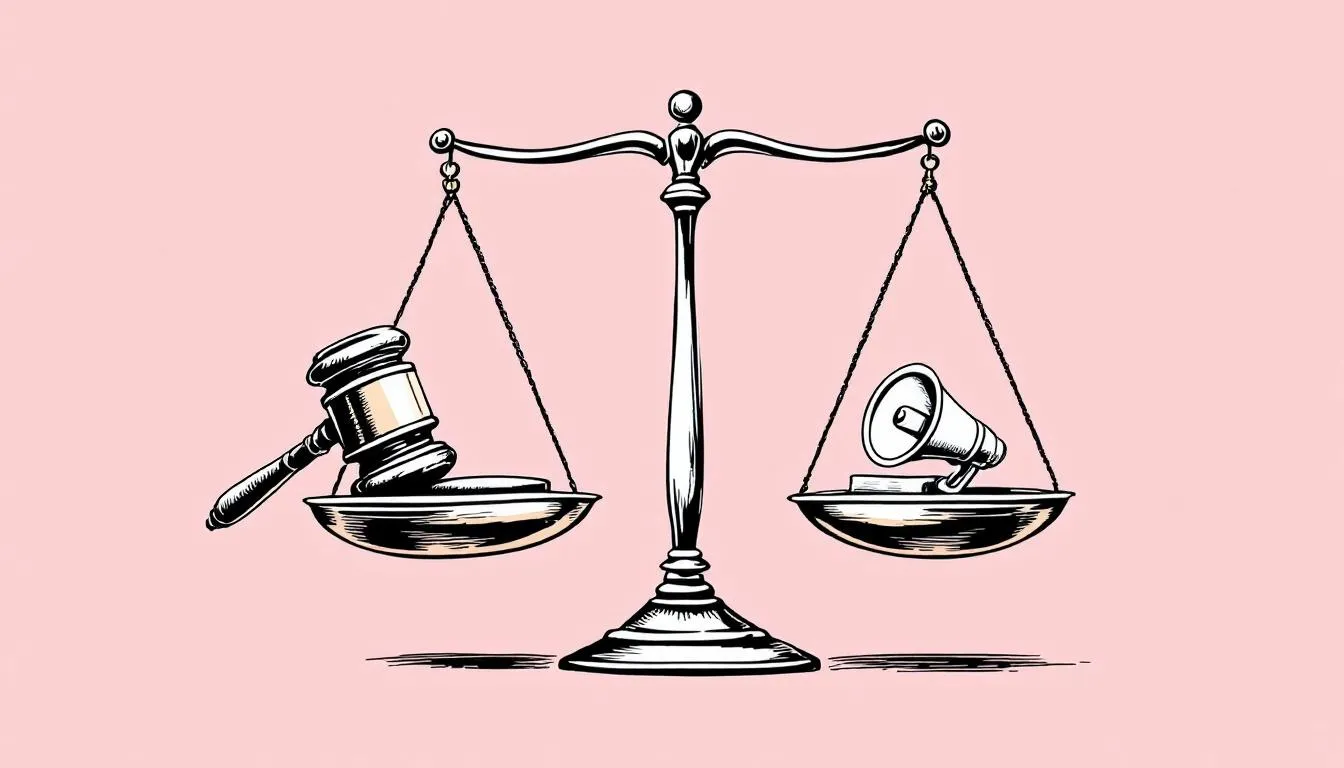
The tension between national security and free speech is a significant area of debate in constitutional law. Recent legislative measures have attempted to address this balance, particularly in the context of digital platforms and social media. These measures often lead to legal disputes, revealing the complexity of regulating content while protecting First Amendment rights. This matter highlights the ongoing challenges in upholding amendment rights.
The ongoing debate highlights the challenges of ensuring national security while safeguarding the fundamental right to free speech. Governments may seek to impose prior restraints or other restrictions on speech to prevent the disclosure of sensitive information, especially during times of crisis or conflict. However, such actions must be carefully weighed against the principles of free expression and the public’s right to know. When the government fails to uphold constitutional restraints, it can result in overreach or the suppression of individual rights, undermining the accountability and rule of law.
Balancing national security and free speech requires a nuanced approach that respects both the necessity of protecting the nation and the importance of maintaining a free and open society. The courts play a crucial role in mediating this balance, ensuring that governmental actions do not overstep constitutional boundaries.
Government Justifications for Prior Restraints
Despite the strong protections against prior restraint provided by the First Amendment, there are scenarios where the government may justify such restrictions. Publishers can be held liable for damages under defamation laws if they distribute false information, highlighting the legal liabilities that can justify prior restraints. Publishers or government officials can also be sued if their actions violate constitutional protections or result in unlawful prior restraint. This underscores the necessity of balancing freedom of the press with accountability for the content published.
Compelling circumstances, such as national security threats or public safety concerns, can allow for the prosecution of publishers despite prior restraint protections and exceptions. These scenarios illustrate the complex interplay between protecting free expression and addressing legitimate governmental interests. For instance, during wartime or in situations where public safety is at risk, the government may seek to restrict speech to prevent imminent harm.
To justify prior restraints, the government must demonstrate a clear and present danger or an immediate threat that necessitates such action. This high burden of proof ensures that prior restraint remains an exceptional measure rather than a common practice, preserving the fundamental rights enshrined in the First Amendment.
Court’s Decision on National Security vs. Free Speech
The Supreme Court has consistently ruled that national security cannot be used as a blanket justification for restricting First Amendment rights without substantial evidence. In the Pentagon Papers case, the Court ruled that the government had not met the burden of proof required to justify prior restraint, emphasizing the strong presumption against such censorship. This decision highlighted the necessity of protecting free expression, even when national security concerns are at stake.
Governments may seek prior restraints to prevent the disclosure of information that could pose a clear threat to national security. However, courts generally require the government to demonstrate that such restraints are necessary and that the publication would cause direct harm to national security. Appeals in these cases are reviewed by higher courts to ensure that First Amendment protections are not unduly infringed, and that the standards for prior restraint are properly applied. This ensures that prior restraint is used only in exceptional cases where the need for secrecy outweighs the public’s right to know.
The debate between national security and free speech continues to evolve, with courts playing a pivotal role in mediating this balance. Requiring substantial evidence and clear justification ensures the judiciary upholds First Amendment principles, even against significant governmental interests, proceeding with caution.
Legal Consequences of Violating Constitutional Restraints
Violating constitutional restraints can lead to significant legal implications for both governments and individuals. The erosion of judicial oversight threatens the enforcement of these restraints, posing a risk to the rule of law and democratic governance. Recent Supreme Court rulings, such as Trump v. CASA, have limited the judiciary’s capacity to act as a check on presidential authority, impacting the enforcement of constitutional principles and the possibility of upholding these vital protections. The Supreme Court’s ruling in Trump v. CASA reduced lower courts’ ability to issue nationwide injunctions, except in class action cases, further constraining judicial oversight.
The decision in Trump v. CASA restricts lower courts’ issuance of nationwide injunctions, affecting their ability to block unconstitutional acts across the nation. This limitation on judicial power underscores the importance of maintaining robust mechanisms for enforcing constitutional restraints and holding government actions accountable. The Supreme Court’s decision invites future presidents to act unconstitutionally with less fear of legal challenge, raising concerns about the potential erosion of checks and balances.
Understanding the legal consequences of violating constitutional restraints is essential for ensuring compliance with the principles of governance and protecting individual rights. Examining the repercussions of these violations highlights the importance of judicial oversight and balanced power distribution. All citizens are entitled to the protections guaranteed by constitutional restraints, regardless of legal proceedings.
Prosecution and Suits Against Publishers
The legal framework allows for publishers to be held liable for content under defamation, copyright infringement, and other tort laws that may conflict with First Amendment protections. Courts have historically upheld the principle that while content may not be subject to prior restraint, legal action can still be taken post-publication for harmful or illegal material. This ensures that publishers are accountable for the accuracy and legality of their content.
Numerous cases illustrate the legal challenged faced by publishers, such as instances of libel that resulted in significant financial penalties. These lawsuits often invoke the chilling effect on press freedom, leading to more cautious reporting from publishers to avoid legal repercussions. This delicate balance between legal accountability and free expression is a critical aspect of modern governance.
Understanding the intersection of legal accountability and free expression is vital for navigating the complexities of publishing in a democratic society. Recognizing potential legal consequences helps publishers manage risks while upholding free press principles.
Enforcement and Oversight Mechanisms
Federal courts play a crucial role in enforcing constitutional restraints and ensuring that executive actions comply with the law. By applying Supreme Court decisions and interpreting constitutional restraints on a case-by-case basis, federal courts impact local jurisdictions and provide a check on government actions. This judicial oversight is essential for maintaining the rule of law and protecting individual rights.
Nationwide injunctions serve to protect the constitutional rights of all citizens, allowing courts to suspend laws or executive orders temporarily. These injunctions can effectively create nationwide pauses on government actions that may violate constitutional provisions, ensuring that potentially harmful policies do not take effect while their legality is being reviewed.
The enforcement of constitutional restraints relies on a robust system of judicial review and oversight. Ensuring governmental actions are scrutinized legally, the judiciary upholds governance principles and protects constitutional rights.
Future Challenges and Developments in Constitutional Restraints
The tension between national security and free speech often leads to debates over the limits of First Amendment protections during crises. In recent years, the volume of classified information has significantly increased, complicating the balance between national security and freedom of speech. This ongoing tension continues to provoke discussion on the implications for First Amendment rights during emergencies.
Throughout U.S. history, national security concerns have led to limitations on free speech, often justified by the government during wartime. These historical precedents highlight the challenges of maintaining a balance between protecting the nation and upholding the principles of free expression.
Looking ahead, the evolving landscape of constitutional restraints will require careful consideration of both historical lessons and contemporary developments to advance the course with respect. Addressing these challenges ensures the protection of constitutional rights in an increasingly complex world.
Technological Advances and New Media
The evolution of constitutional restraints is increasingly shaped by technological advancements and the challenges they present to existing legal frameworks. Emerging technologies and social media are reshaping the landscape in which constitutional restraints operate, posing new challenges for legal frameworks. Digital technologies influence both the exercise of freedoms and the distribution of power in the digital realm, necessitating new approaches to constitutional governance.
Emerging trends in Internet governance highlight fragmentation and polarization, reshaping the constitutional protections of rights in digital spaces. As digital platforms become more central to public discourse, the need to address issues of content moderation, censorship, and free expression becomes increasingly urgent.
Understanding technological impacts on constitutional restraints helps develop strategies to protect rights and keep governance frameworks relevant in the digital age.
Legislative Efforts and Judicial Review
Judicial reviews play a critical role in determining the legality of actions taken by governments and private entities concerning constitutional restraints. Recent legislative initiatives have sought to modify judicial powers, potentially limiting courts’ ability to enforce constitutional protections effectively. These efforts underscore the ongoing tension between legislative actions and judicial oversight in maintaining constitutional governance. Judicial restraint is a judicial interpretation that recommends favoring the status quo in judicial activities, often emphasizing adherence to established precedents.
The Supreme Court and lower courts continue to play a vital role in interpreting and enforcing constitutional restraints, ensuring that governmental actions adhere to the principles enshrined in the Constitution. Reviewing and ruling on the constitutionality of laws and actions, the judiciary checks governmental power.
Legislation efforts and judicial review must work in tandem to protect First Amendment rights and uphold the integrity of constitutional governance. By addressing these challenges, the legislature can ensure that the balance between governmental authority and individual liberties is maintained in a dynamic and evolving legal landscape.
Summary
In summary, constitutional restraints are essential mechanisms that prevent government overreach and protect individual liberties. The principles of separation of powers and checks and balances form the foundation of these restraints, ensuring a balanced distribution of power and accountability in governance. Landmark Supreme Court cases have played a pivotal role in defining and upholding these principles, particularly in the context of prior restraint and press freedom.
The ongoing tension between national security and free speech highlights the complexities of maintaining First Amendment protections in modern governance. Technological advancements and new media present additional challenges, necessitating continuous adaptation of legal frameworks to protect individual rights in the digital age.
By understanding the historical context, key principles, and contemporary challenges of constitutional restraints, we can appreciate their significance in safeguarding democratic values and individual freedoms. As we navigate the future, it is crucial to uphold these principles and ensure that governmental actions remain within the bounds of the Constitution.
Frequently Asked Questions
What are constitutional restraints?** **?
Constitutional restraints are essential mechanisms that limit government authority, ensuring that power is not concentrated in any single branch, thereby protecting individual liberties and maintaining a balanced governance system. These restraints are crucial for preventing the misuse of power and promoting justice.
What is prior restraint?** **?
Prior restraint is a government action that prohibits speech or publication before it takes place, typically viewed as unconstitutional under the First Amendment due to its adverse effects on free expression and press freedom. The founding fathers viewed the practice of prior restraint as detrimental to democracy, as it undermines the free exchange of ideas essential to a functioning democratic society.
What was the significance of the Near v. Minnesota case?** **?
The significance of Near v. Minnesota lies in its establishment of the principle against prior restraint, declaring that government censorship through pre-publication bans is unconstitutional. This ruling set a vital precedent for safeguarding press freedom and limiting governmental interference in the media.
How does the Supreme Court balance national security and free speech?** **?
The Supreme Court balances national security and free speech by requiring the government to prove a clear and present danger to justify any restrictions on speech. This approach safeguards First Amendment rights from being overly curtailed under the guise of national security.
What are the legal consequences of violating constitutional restraints?** **?
Violating constitutional restraints may result in severe legal consequences, including judicial actions against individuals or government entities. Such violations undermine the rule of law and can weaken checks on authority, as highlighted by recent Supreme Court rulings.