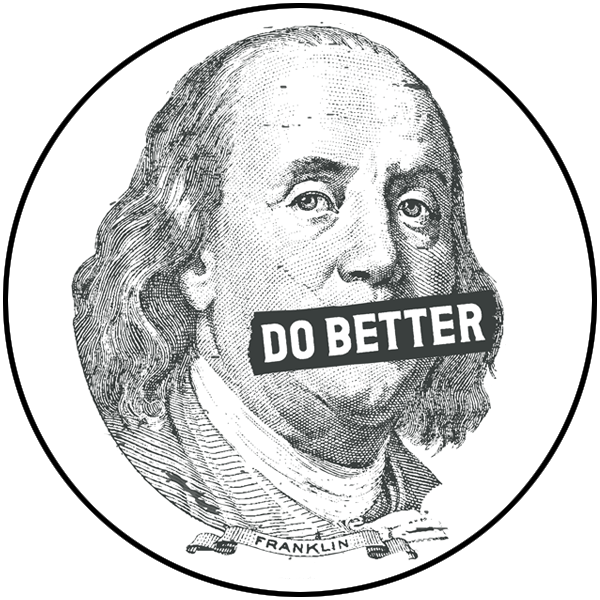
In his prescient Farewell Address of 1796, George Washington warned that “the spirit of passionate factionalism always serves to distract the public councils and enfeeble the public administration.” Today, as legislative productivity reaches historic lows and partisan divisions deepen, Washington’s admonition echoes with renewed urgency. The gridlock plaguing our modern Congress represents not merely a political inconvenience, but a fundamental betrayal of the constitutional framework our founders designed to promote deliberative governance and responsive representation.
Key Takeaways
- Legislative gridlock has intensified due to hyper-partisan polarization, procedural abuse of mechanisms like the filibuster, and the abandonment of constitutional principles that once fostered compromise and deliberation.
- The 118th Congress exemplifies this crisis, having enacted merely 78 laws by mid-2024—the lowest productivity since the Great Depression—while relying heavily on obstruction tactics that circumvent genuine debate.
- Constitutional solutions exist through structural reforms including campaign finance restrictions, term limits, filibuster reform, and a return to the founding principles of federalism and separated powers that can restore effective governance.
Understanding Legislative Gridlock: A Constitutional Perspective
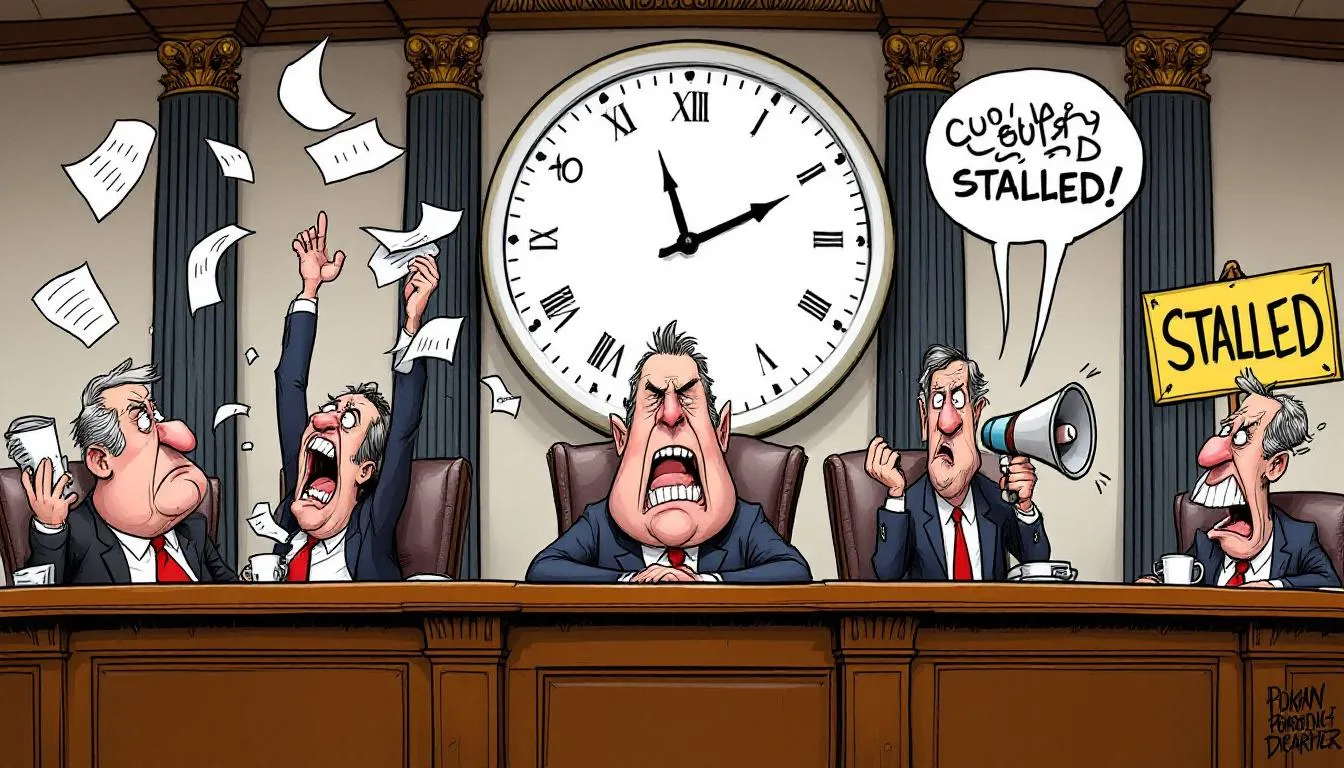
Legislative gridlock manifests when Congress fails to fulfill its constitutional mandate to deliberate and enact legislation addressing the nation’s pressing concerns. This phenomenon, while not unknown to previous generations, has reached unprecedented levels due to what Washington feared most: the triumph of faction over national interest.
The framers of our Constitution, drawing upon classical education and historical precedent, designed a system of checks and balances intended to slow hasty legislation while ensuring ultimate accountability to the people. However, they never envisioned a system where procedural mechanisms would be weaponized to prevent any legislative action whatsoever, transforming constitutional safeguards into tools of perpetual obstruction.
Definition and Historical Foundations
True legislative gridlock occurs when partisan considerations supersede the deliberative process the founders intended. James Madison, writing in Federalist 10, acknowledged that factions were an inevitable consequence of free government, yet he argued that our constitutional structure would mitigate their harmful effects through the clash of competing interests in an extended republic.
The modern reality presents a stark departure from this vision. Where Madison envisioned competing factions checking one another through debate and compromise, we witness instead the institutionalization of permanent opposition, where victory is measured not by legislative accomplishment but by the prevention of the opposing party’s success.
The procedural hurdles that compound this crisis—particularly the modern filibuster—represent a perversion of their original intent. The founders designed the Senate as a deliberative body where lengthy debate would refine legislation, not as a chamber where debate could be indefinitely avoided through procedural maneuvering. As Washington observed, passionate factionalism “agitates the citizenry with ill-founded jealousy and false alarms”—a description that aptly captures our current political climate.
The Corruption of Constitutional Intent
The transformation of legislative gridlock from occasional inconvenience to systemic dysfunction reflects broader departures from constitutional principles. The founders intended Congress to be responsive to the people while maintaining the capacity for thoughtful deliberation. Today’s gridlock achieves neither objective: representatives prioritize fundraising and partisan messaging over genuine legislative work, while procedural obstacles prevent meaningful debate on substantive issues.
This corruption of constitutional intent extends to the fundamental relationship between representatives and their constituencies. The founders envisioned legislators who would return to their communities after brief periods of public service, bringing local knowledge to national deliberations. Instead, we have created a professional political class whose primary concern is perpetual reelection, fostering the very conditions Washington warned would lead to the “mischiefs of faction.”
Evidence of Legislative Gridlock in Recent Years
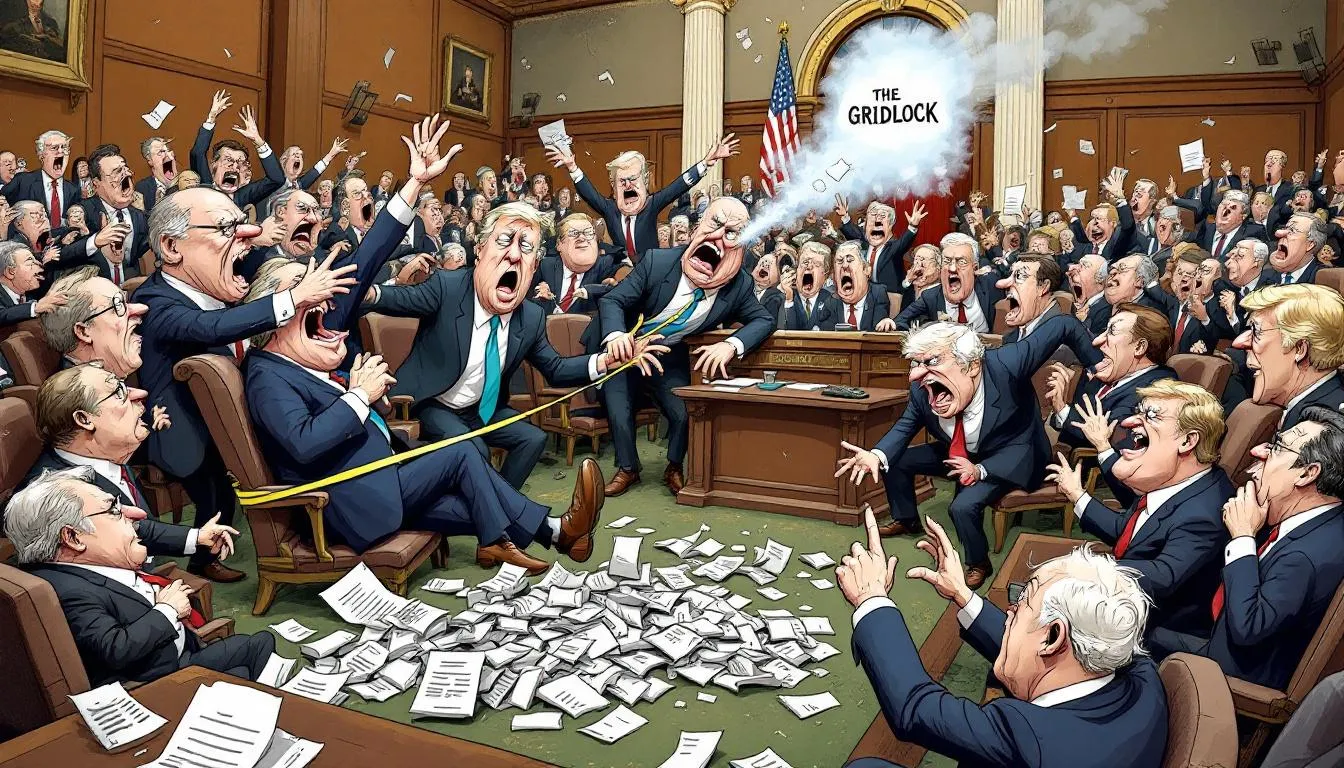
The 118th Congress provides stark evidence of how far we have departed from the founders’ vision of effective republican government. With only 78 laws enacted by mid-2024, this Congress has achieved less than one-third of the legislative productivity typical of previous generations. This dramatic decline in legislative output occurs precisely when the nation faces challenges requiring thoughtful, bipartisan solutions.
The Decline of Legislative Productivity
The contrast with previous eras is instructive. The 113th Congress passed 196 bills, while the 114th enacted 329 measures. This precipitous decline reflects not merely political disagreement—which the founders expected—but the systematic abuse of procedural mechanisms to prevent legislative action entirely.
The reliance on continuing resolutions and last-minute compromise measures further illustrates the breakdown of regular legislative order. The Constitution anticipates annual appropriations passed through deliberative process, not governance by crisis and temporary funding measures that prevent long-term planning and fiscal responsibility.
Procedural Obstruction and Constitutional Abuse
The 118th Congress witnessed 266 cloture motions, demonstrating how procedural tactics have replaced substantive debate. This represents a fundamental perversion of the Senate’s role as conceived by the founders, who intended prolonged deliberation to improve legislation, not to prevent it entirely.
The modern filibuster, requiring no actual debate or physical presence, abandons the constitutional principle that minority rights should be protected through participation in deliberation, not through the power to halt all proceedings. When senators can obstruct legislation without even explaining their objections to their colleagues or constituents, the system has departed entirely from its constitutional moorings.
The Entrenchment of Partisan Division
Polarization in the 118th Congress reached 88.55 on a 100-point scale, indicating that representatives vote along party lines with unprecedented consistency. This level of partisan cohesion would have alarmed the founders, who expected representatives to exercise independent judgment informed by local interests and national needs.
More troubling, 62% of Republicans and 54% of Democrats view the opposing party “very unfavorably”—a perspective that makes the compromise essential to republican government nearly impossible. This mutual antagonism transforms political disagreement from a feature of healthy democracy into a pathology that prevents governance itself.
Implications of Legislative Gridlock: The Erosion of Republican Government
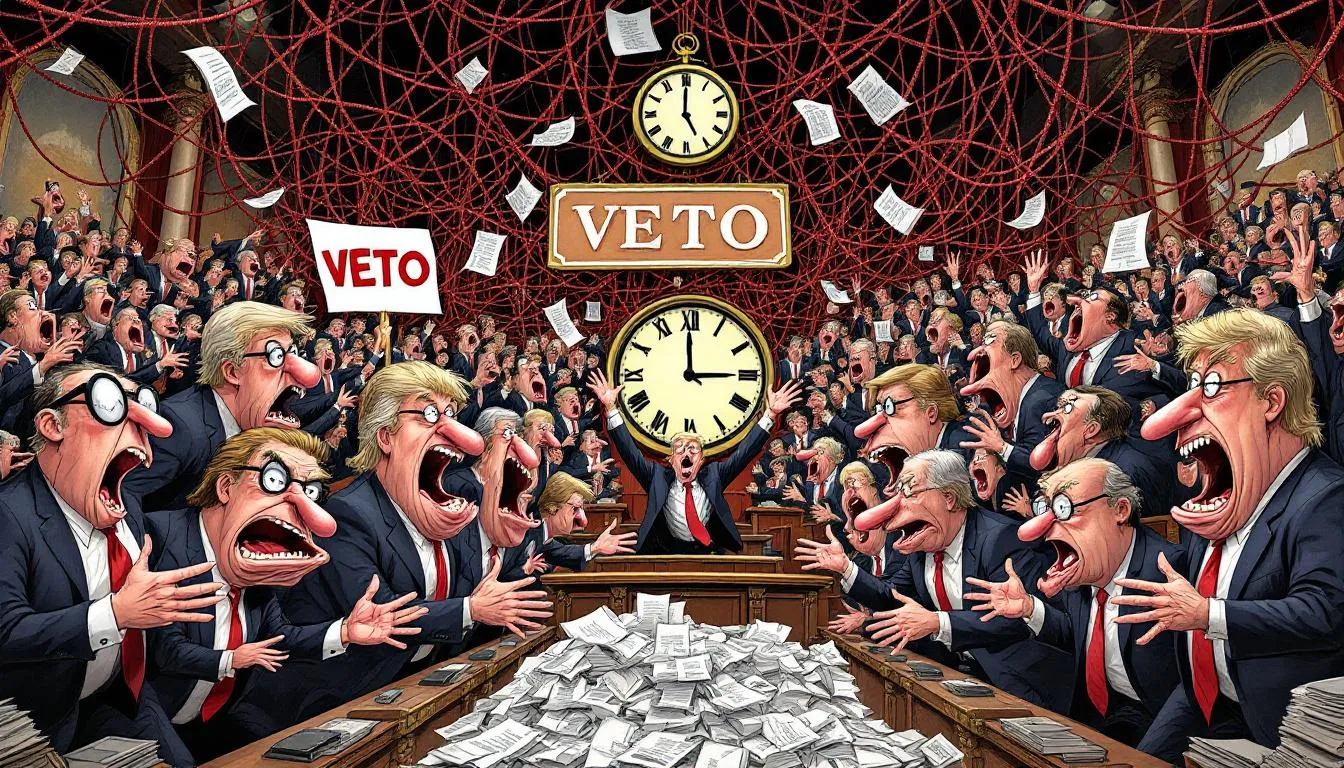
Legislative gridlock produces consequences extending far beyond delayed legislation. It represents a fundamental failure of the constitutional system to fulfill its primary purpose: providing effective governance while maintaining popular accountability.
The Breakdown of Constitutional Order
When Congress fails to pass regular appropriations, it abandons one of its most basic constitutional responsibilities. The resulting reliance on continuing resolutions and debt ceiling confrontations creates precisely the kind of fiscal instability the founders sought to prevent through regular legislative process.
Government shutdowns—unthinkable to previous generations—have become routine tools of political warfare, transforming constitutional mechanisms into weapons of partisan combat. The 2019 shutdown that suspended 300,000 federal workers exemplifies how gridlock corrupts the basic functions of government.
The Erosion of Public Trust and Civic Virtue
Perhaps most damaging, persistent gridlock undermines the civic virtue upon which republican government depends. When citizens observe that their representatives prioritize partisan advantage over national welfare, they lose faith in democratic institutions themselves. Recent polls indicating only 32% of Americans express confidence in Congress reflect this deeper crisis of republican government.
This erosion of trust creates a vicious cycle: as citizens lose faith in their institutions, they become more susceptible to demagogic appeals and less willing to support the compromise essential to democratic governance. The founders understood that republican institutions require civic virtue to function; gridlock corrodes that virtue by demonstrating that institutions serve narrow partisan interests rather than the common good.
Economic and Social Consequences
The economic uncertainty created by repeated debt ceiling crises and continuing resolutions undermines long-term planning and investment. When businesses and individuals cannot predict basic government functions, economic growth suffers, and the prosperity upon which free government depends is compromised.
These consequences extend beyond immediate economic effects. When government fails to address pressing challenges—from infrastructure needs to fiscal imbalances—problems compound, eventually requiring more drastic interventions that may threaten constitutional limitations on government power.
Proposals to Reduce Legislative Gridlock: Constitutional Solutions
The path forward requires a return to constitutional principles rather than mere procedural adjustments. The founders provided mechanisms for reform through the amendment process, recognizing that changing circumstances might require structural modifications to preserve republican government.
Campaign Finance Reform and Electoral Integrity
The influence of special interests corrupts the deliberative process the founders intended. A constitutional amendment restricting campaign contributions to individual citizens qualified to vote for particular candidates would restore the direct relationship between representatives and their constituencies that the founders envisioned.
This reform aligns with Thesis 22 of constitutional restoration: ensuring that elected officials remain accountable to their constituents rather than to distant financial interests. When representatives depend primarily on their voters rather than special interest contributions, they become more likely to prioritize legislation serving the common good over partisan advantage.
Term Limits and the Restoration of Citizen-Legislators
The founders never intended to create a professional political class insulated from the concerns of ordinary citizens. Constitutional amendments establishing term limits would restore the citizen-legislator ideal, reducing the incentives for partisan positioning that serve electoral rather than national interests.
Career politicians naturally prioritize reelection over governance, creating the conditions for gridlock when electoral considerations conflict with legislative responsibilities. Term limits would restore the founder’s vision of temporary public service, encouraging representatives to focus on substantive policy rather than political survival.
Filibuster Reform and Deliberative Democracy
Rather than eliminating the filibuster entirely, reform should restore its original purpose: ensuring thorough deliberation of important legislation. Requiring senators to actively debate legislation they oppose would restore accountability while preserving minority rights through participation rather than obstruction.
This reform aligns with constitutional principles by ensuring that procedural protections serve their intended purpose of improving legislation through debate rather than preventing consideration entirely. As envisioned in Thesis 27, genuine filibuster requiring actual debate would restore transparency and accountability to the legislative process.
Structural Reforms and Federalism
Many current legislative disputes reflect the federal government’s assumption of responsibilities the founders intended for state governments. Returning authority over education, healthcare, and other domestic policies to state governments would reduce federal gridlock while allowing diverse approaches suited to local conditions.
This restoration of federalism would align with the founder’s vision of a federal government with enumerated powers, leaving most domestic governance to states better positioned to respond to citizen needs. Reducing the federal government’s scope would naturally reduce the stakes of federal political competition, making compromise more achievable.
Case Studies: Gridlock in Contemporary Context
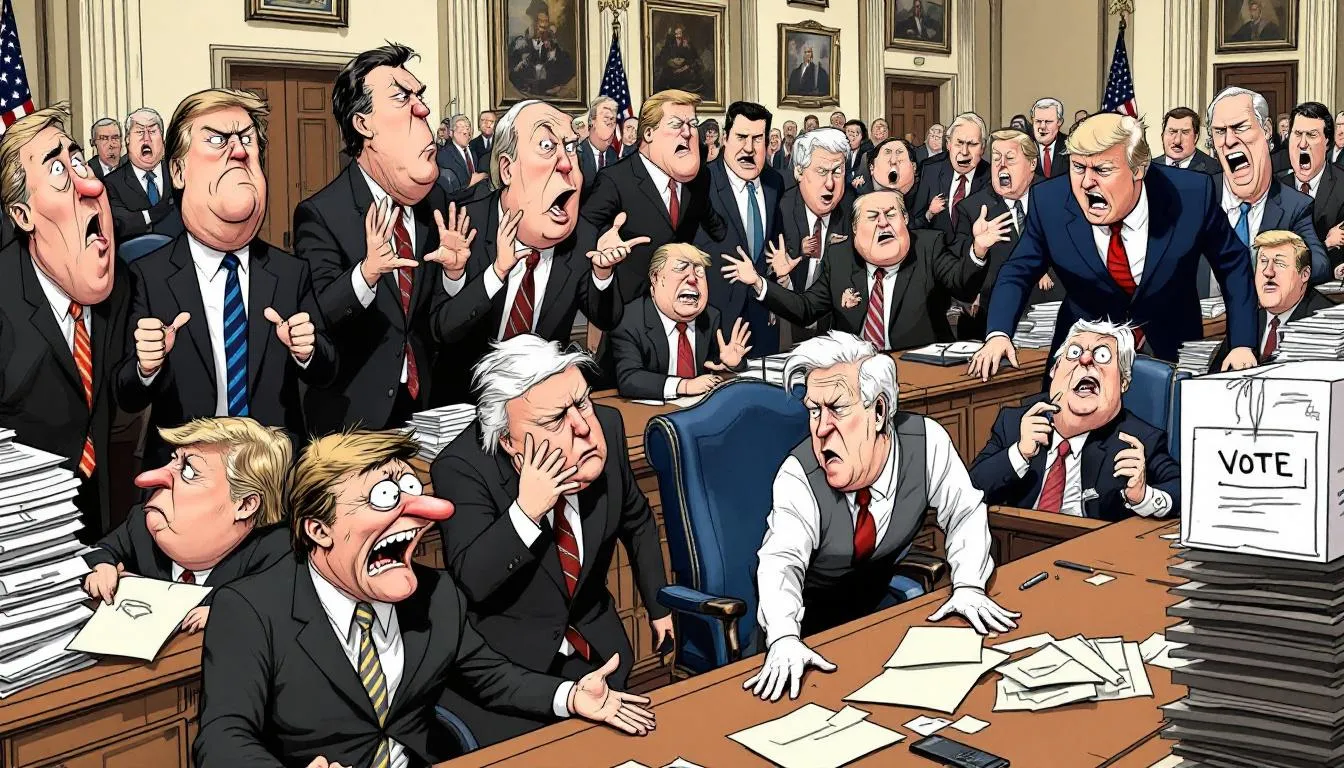
Recent legislative battles illustrate how departing from constitutional principles creates and perpetuates gridlock, while adherence to founding principles offers pathways to resolution.
The National Defense Authorization Act: Bipartisan Potential
Defense legislation traditionally achieves bipartisan support because national security represents a clear constitutional responsibility of the federal government. When legislators focus on enumerated constitutional powers rather than expanding federal authority, compromise becomes more achievable.
The relative success of defense legislation demonstrates that gridlock is not inevitable when Congress addresses its proper constitutional responsibilities rather than attempting to regulate every aspect of American life.
Social Security Reform and Constitutional Limits
The failure of Social Security reform efforts reflects partly the federal government’s assumption of responsibilities the founders might have preferred to leave with states and local communities. When the federal government attempts to address every social challenge, political stakes become so high that compromise becomes impossible.
A more constitutional approach might focus federal policy on ensuring interstate commerce flows smoothly while allowing states to develop diverse approaches to social insurance suited to their particular circumstances and preferences.
Judicial Nominations and Constitutional Restoration
The partisan battles surrounding judicial nominations reflect the Supreme Court’s departure from its original constitutional role as interpreter of law toward policy-making functions the founders intended for elected branches. When courts assume legislative responsibilities, judicial appointments become proxy battles over policy preferences rather than legal qualifications.
Restoring constitutional limitations on judicial power would reduce the political stakes of judicial nominations, making confirmation processes more focused on legal competence rather than policy preferences.
The Future of Legislative Gridlock: Constitutional Renewal or Continued Decline
The trajectory of American government depends upon whether we return to constitutional principles or continue departing from the founder’s vision. History suggests that republics either renew their founding principles or decline into other forms of government.
The Path of Constitutional Restoration
Returning to constitutional principles offers the prospect of restored legislative function through structural reforms that address root causes rather than symptoms. Campaign finance reform, term limits, federalism restoration, and procedural reforms could create conditions for effective governance while maintaining popular accountability.
This path requires the kind of civic virtue and constitutional understanding the founders believed essential to republican government. It demands citizens who prioritize long-term institutional health over short-term partisan advantage, and representatives willing to sacrifice political careers for constitutional principle.
The Consequences of Continued Gridlock
Alternatively, continued gridlock may lead to extra-constitutional governance through executive overreach, judicial policy-making, or administrative rule by unelected bureaucrats. When legislative deliberation fails, power migrates to institutions less accountable to popular control, threatening the republican government the founders established.
History provides numerous examples of republics that failed to maintain their founding principles, ultimately transforming into other forms of government. The American experiment in self-government is not immune to such historical patterns.
Summary: Restoring the Constitutional Framework
Legislative gridlock represents far more than political inconvenience—it signals a fundamental departure from the constitutional principles upon which American government rests. The founders anticipated political disagreement but designed institutions capable of transforming conflict into productive deliberation serving the common good.
Restoring effective governance requires returning to constitutional first principles: limiting federal authority to enumerated powers, ensuring representatives remain accountable to local constituencies, and maintaining institutional structures that reward deliberation over obstruction. The path forward lies not in abandoning our constitutional framework but in renewing our commitment to the wisdom of those who designed it.
As Washington warned, the alternative to constitutional governance is the triumph of faction over national interest—precisely the condition we witness today. The choice before us is clear: constitutional renewal or continued decline toward forms of government the founders fought to prevent. The preservation of American liberty depends upon the path we choose.
Frequently Asked Questions
What distinguishes current gridlock from historical legislative conflicts?
Historical legislative conflicts occurred within a framework of shared constitutional understanding, where opponents could compromise because they agreed on fundamental principles of government. Current gridlock reflects deeper disagreement about the proper scope and role of federal authority, making compromise more difficult because the stakes involve the basic structure of American government.
How would campaign finance reform specifically address gridlock?
Campaign finance reform would restore the direct relationship between representatives and their local constituents that the founders intended. When legislators depend primarily on local voters rather than national fundraising networks, they become more responsive to local concerns and more willing to compromise with colleagues facing similar pressures from their own constituents.
Why focus on constitutional solutions rather than political reforms?
Political reforms address symptoms while constitutional solutions address causes. Procedural changes within the current system have repeatedly failed because they do not alter the fundamental incentives that create gridlock. Constitutional reforms would restructure those incentives, creating lasting solutions rather than temporary fixes.
What role does civic education play in resolving gridlock?
Civic education provides citizens with the constitutional literacy necessary to hold representatives accountable for departing from founding principles. When voters understand the proper functions of different governmental institutions, they can better evaluate whether their representatives are fulfilling their constitutional responsibilities or merely engaging in partisan performance.
How would federalism restoration reduce congressional gridlock?
Restoring federalism would reduce congressional gridlock by limiting federal authority to areas where there is constitutional consensus, such as national defense and interstate commerce. When state governments handle most domestic policy, federal political stakes decrease, making congressional compromise more achievable on the issues that properly belong to federal jurisdiction.